Apple Paid Google a Billion Dollars to Fix Siri. It Might Actually Work This Time.
Remember that scene in Rocky IV where Rocky is out there chopping wood and running through the snow, training with pure heart and determination? That’s been Siri for twelve years. Meanwhile, ChatGPT and Claude walked in looking like Ivan Drago hooked up to every machine in a state-funded lab. Apple just watched the sparring footage and said, “Alright, get us the machines too.”
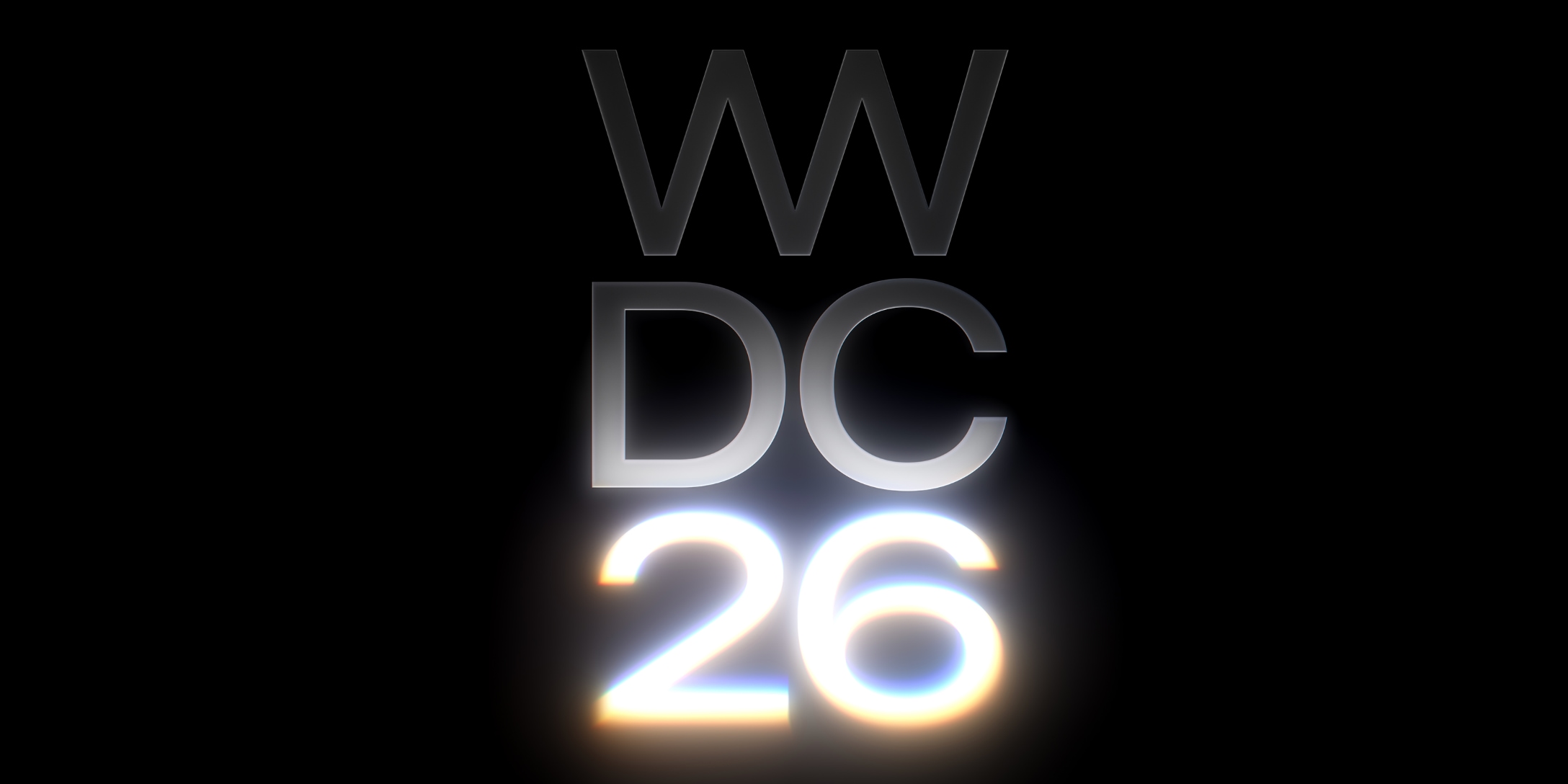
A billion dollars a year. That’s what Apple is reportedly paying Google to plug Gemini into Siri. And two days ago, the WWDC 2026 invitation graphic basically confirmed what’s coming: Siri is getting the biggest overhaul in its history.
The Graphic That Told You Everything
On April 19, Apple dropped the official WWDC 2026 graphic. Most people saw a glowing “26” and moved on. Bloomberg’s Mark Gurman saw something else: a direct preview of the new Siri interface.
That halation effect — the intense light bleeding into darkness — isn’t artistic decoration. It’s literally what Siri will look like in iOS 27. When you trigger Siri, the Dynamic Island will glow with a “Search or Ask” prompt and a glowing cursor. A thin light will wrap around the edges of the Dynamic Island. It’s the kind of subtle-but-unmistakable design choice Apple loves: hiding product reveals inside event branding.
There’s also a dedicated Siri app coming. Pre-installed on every iOS 27 device. Back-and-forth conversations. Full conversation history. Basically everything ChatGPT and Claude have been doing for two years, except now it’ll come with the Apple logo and a billion dollars of Google infrastructure behind it.
The Billion-Dollar Elephant in the Room
Let’s talk about the money, because the money tells you everything about Apple’s actual AI strategy.
In January, CNBC reported that Apple signed a multiyear partnership with Google. The deal gives Apple access to a custom 1.2 trillion parameter Gemini model. On-device processing stays on-device. Complex queries go through Apple’s Private Cloud Compute. Google provides the brains. Apple provides the privacy theater. Everyone’s happy.
This is Apple admitting something it hates admitting: someone else built something better.
For years, Apple’s AI strategy was essentially “we’ll do it ourselves, and it’ll be worse, but at least your data stays on the phone.” And look, I respect that privacy stance. But there’s a difference between “we prioritize privacy” and “Siri can’t set two timers at the same time.” Apple Intelligence was supposed to close the gap. It didn’t. Not fast enough, anyway.
So they did what every smart company eventually does when they’re getting lapped: they called the people who were winning.
Third-Party AI Extensions: The Real Story
Here’s the part that matters most if you build apps.
iOS 27 will introduce an Extensions system for third-party AI chatbots inside Siri. A new panel in Settings will let users enable or disable AI services — Claude, ChatGPT, Grok, and whatever else gets approved. Developers will be able to build AI agents that plug directly into Siri’s interface.
Read that again. Apple is opening Siri to competing AI models. The company that famously locks down everything is creating an AI marketplace inside its most personal assistant.
We wrote about this a week ago when the first rumors surfaced, but the WWDC graphic confirmation makes it feel real in a way rumors don’t. This isn’t a “maybe someday” roadmap item. This is a “we’re showing you the UI in our invitation” level of done.
For developers, this means a new category of apps entirely. You’re not just building iOS apps anymore — you’re potentially building AI agents that live inside Siri. If you’ve been working with prompt engineering or building tools around AI workflows, the barrier between “standalone AI app” and “system-level AI integration” just got a lot thinner.
This is, incidentally, exactly why we’ve been investing time in PromptKit. Managing prompts, templates, and AI workflows is going to matter a lot more when your prompts can live inside Siri rather than inside a third-party app.
The Snow Leopard Play
iOS 27 isn’t just about Siri. It’s about Apple taking a breath.
Internally, iOS 27 is reportedly being treated as a “Snow Leopard” release — named after macOS 10.6, the legendary update that shipped almost no new features and instead just made everything work better. Apple’s engineers are supposedly rewriting chunks of the operating system, squashing bugs, and optimizing performance.
If you’ve been shipping iOS apps for any amount of time, you know why this matters. Every WWDC, Apple drops a mountain of new APIs, new frameworks, new design paradigms — and developers spend six months just keeping their existing apps from breaking. A stability year means we can actually ship improvements instead of playing catch-up.
The rumored result: better battery life, even on older iPhones. Though “older” is doing some heavy lifting here, because…
Four iPhones Just Got the Boot
As of a 9to5Mac report from April 20, iOS 27 will drop support for:
- iPhone 11
- iPhone 11 Pro
- iPhone 11 Pro Max
- iPhone SE (2nd generation)
All four run the A13 Bionic chip. iOS 27 will require A14 Bionic or later, meaning iPhone 12 is the new floor.
For developers, this is actually good news. Dropping A13 support means we can finally assume A14 capabilities as baseline — better Neural Engine performance, more consistent on-device ML, and all the Apple Intelligence features that need that minimum hardware. If you’ve been maintaining compatibility branches for older chips, you can start cleaning up.
The full Dynamic Island Siri experience will require iPhone 15 Pro or newer, though. So there’s still a fragmentation story to manage.
The Foldable Footnote
Oh, and iOS 27 is apparently adding side-by-side app multitasking for the iPhone Fold. Apple’s first foldable is still expected to launch late 2026, and iOS 27 will ship the software framework for it.
I don’t have strong feelings about foldables. But I have strong feelings about Apple introducing a new form factor that requires us to rethink layouts. If you’re building with SwiftUI and adaptive layouts, you’re probably fine. If you’re still manually calculating frame sizes somewhere… well, start cleaning that up now.
What This Actually Means
Let me cut through the noise and give you the five things that matter:
1. Siri is becoming a real AI assistant. Not “real” in the “Siri can find restaurants” sense. Real in the “you can have a multi-turn conversation about your code” sense. Gemini-powered, chatbot-style, with history.
2. Third-party AI is coming to iOS at the system level. Claude and ChatGPT as Siri extensions isn’t a gimmick — it’s Apple acknowledging that no single model will win everything. This is good for users and potentially great for developers building AI-powered experiences.
3. iOS 27 is a stability year. Fewer new frameworks to learn. More time to ship. Better battery life. This is the WWDC where you improve your existing apps instead of rebuilding them.
4. A13 is dead. iPhone 12 is the new minimum. Plan your deployment targets accordingly.
5. Foldables are coming. Not urgent, but start thinking about flexible layouts if you haven’t already.
The Bigger Picture
Apple paying Google to fix Siri feels like a plot twist, but it’s actually the most pragmatic thing they’ve done in years. The AI race isn’t about who builds everything in-house. It’s about who assembles the best experience. Apple is still better than anyone at hardware, privacy infrastructure, and user experience. Google is better at large language models. The partnership makes sense even if it bruises Cupertino’s ego.
WWDC 2026 kicks off June 8. We’ll be covering it live, testing every beta, and breaking down what matters for indie developers and what’s just keynote spectacle.
We just finished a week with Claude Mythos Preview that changed how we think about AI-assisted development. The idea that Claude could soon live inside Siri, available at the system level on every iPhone? That’s not a small deal. That’s the next chapter of how we build and use software.
Rocky eventually won that fight, by the way. But he had to change his training strategy first. Apple seems to have finally gotten that memo.
Related Reading
- Apple Stopped Pretending It Could Build AI Alone. That’s the Best WWDC News in Years. — Our first look at Apple opening Siri to third-party AI.
- We Got Our Hands on Claude Mythos Preview. Here’s What Actually Happened. — What happened when we pointed the world’s most powerful AI model at our code.
- Apple Gave iOS a Makeover Nobody Asked For. Now Everyone Has to Live With It. — The Liquid Glass design controversy and what it means for iOS 27.
Share this post
Comments
Leave a comment
NativeFirst Team
EditorialThe NativeFirst team — engineers and designers building native Apple apps and writing the courses we wish we had when we started.