Apple Said 'All Systems Glow.' Developers Said 'Not So Fast.'
You know that company all-hands meeting where the CEO unveils the “exciting new direction” and half the room is nodding enthusiastically while the other half is quietly opening LinkedIn on their phones under the table?
That was the developer internet yesterday.
The Tagline That Lit the Fuse
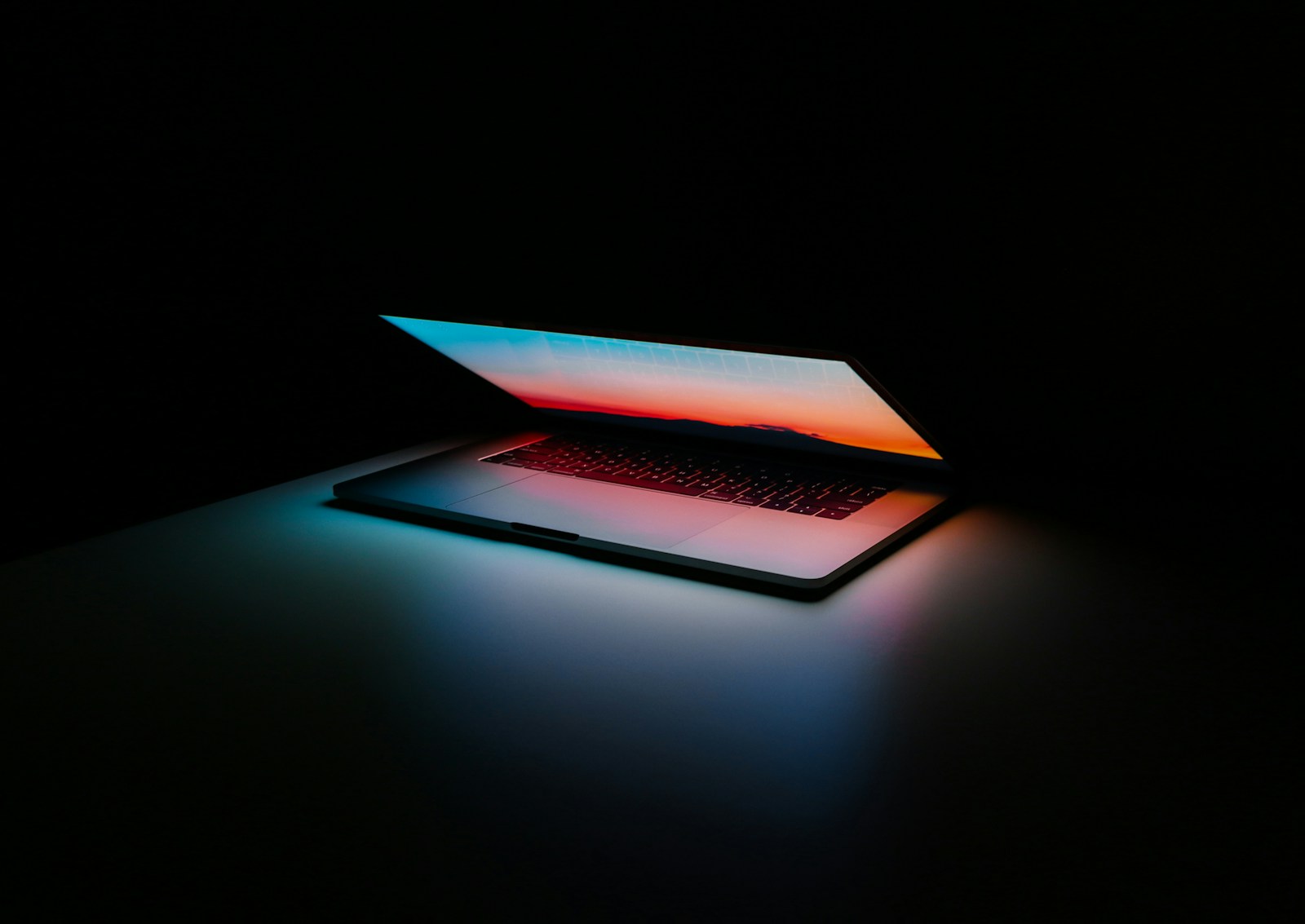
On June 1, Apple updated its WWDC page with a new tagline: “All Systems Glow.” A play on “all systems go.” Cute. Accompanied by a new wallpaper, an Apple Music playlist, and the kind of polished teaser video that makes you feel like you’re watching a trailer for a movie where the protagonist is a gradient.
The message is hard to misread. When Apple says “all systems glow,” they’re not talking about one feature or one framework. They’re telling you that AI is baked into everything. Every system. Every surface. The entire operating system is about to light up with intelligence, whether you asked for it or not.
WWDC 2026 kicks off Monday, June 8 at 10 a.m. Pacific. iOS 27, macOS 27, watchOS 27, visionOS 27 — the full lineup gets revealed. And based on every leak, rumor, and Apple’s own not-so-subtle hints, the centerpiece is a complete Siri overhaul powered by — wait for it — Google’s Gemini models running on-device.
The forums had opinions.
Team “Finally”
Let’s start with the optimists. And they have a point.
Apple promised “Apple Intelligence” back at WWDC 2024 with iOS 18. Smart summaries. Writing tools. A Siri that could actually hold a conversation. Two years later, most of those features either shipped half-baked, rolled out to a handful of countries, or quietly got pushed to “coming soon.” The developer community has been watching a slow-motion IOU for 24 months.
So when Apple drops a tagline that basically says “it’s all happening now,” some developers exhaled with relief.
“All systems ready to glow after two years! Looking forward to this,” wrote one MacRumors forum member. Another simply called it “very interesting WWDC.” After years of Apple’s AI story being a punchline compared to what Google, OpenAI, and Anthropic were shipping, the idea of Apple finally going all-in felt like catching a bus you’d been chasing for six blocks.
The leaked details support the excitement: a dedicated Siri app with a conversational chat interface. Siri living in the Dynamic Island. Web search, image generation, coding assistance, multi-step commands, and the ability to revisit old conversations. If even half of this ships, it’s the biggest Siri update since… well, since Siri.
For iOS developers specifically, the App Intents story is enormous. We wrote about Apple building native MCP support on top of App Intents — your app’s intents becoming tools for every AI agent on the device. If WWDC makes this official with full developer documentation and APIs, it could be the most important announcement for indie developers in years.
Team “Please God No”
Then there’s the other half of the room. And they’re loud.
“I already hate this because it sounds like it’s going to be ‘every part of iOS is powered by AI,’” wrote chrono1081 on MacRumors within hours of the announcement.
“The whole event is what we should of got 2 years ago. I dont want ai everywhere,” added Kylo83, who also noted that NVIDIA and Windows had actually impressed them more this year — a sentence that would have been unthinkable from a Mac forum regular three years ago.
The skeptics aren’t anti-technology. They’re anti-this specific implementation at this specific pace. Their concerns break down into three categories:
1. The “All or Nothing” Problem. One forum member captured it perfectly: Apple gives you the entire AI stack or nothing. No granular control. No “I want smart search but not AI-generated summaries.” No “use Siri for timers but keep it away from my email.” If you’re in, you’re all the way in. Several developers specifically asked for the ability to selectively install features rather than getting the full AI treatment forced onto their device.
2. The Performance Tax. When one developer joked that “All Systems Glow” was really a reference to CPUs running hot, it landed because the fear is real. Another put it bluntly: “All Apple gadget CPUs will glow hot trying to parse ai slop. It’s a warning.” On-device AI models consume battery, thermal headroom, and storage. If iOS 27 pushes AI inference into every corner of the OS, older devices are going to feel it.
3. The Google Question. Apple’s $1 billion annual deal with Google to power the rebuilt Siri with Gemini models remains the elephant in the server room. One forum member’s reaction: “ewww chatgpt. already picked the loser. too late to switch to claude?” The privacy implications of Google’s involvement — regardless of Apple’s Private Cloud Compute assurances — still make developers nervous. Apple built an empire on privacy marketing. Outsourcing intelligence to Google’s architecture, even in an Apple-controlled sandbox, feels like inviting the fox to guard the henhouse while insisting the fox is wearing a very nice muzzle.
The Real Problem Nobody’s Talking About
Here’s what gets lost in the excitement vs. skepticism debate: the developer migration burden is stacking up fast.
In just the last month, iOS developers have been told:
- Liquid Glass is mandatory in iOS 27 — the compatibility flag is gone
- SiriKit is deprecated — App Intents or nothing
- Core ML is being replaced by Core AI and the Foundation Models framework
- Swift 6.2’s concurrency model is the new baseline
- A foldable iPhone is coming, which means adaptive layout APIs
That’s five major migration efforts landing simultaneously. And now “All Systems Glow” is telling developers there’s likely more coming on June 8.
Every WWDC brings change. That’s the deal. But there’s a difference between “here are new tools you can adopt at your own pace” and “here are five wrecking balls, they arrive on the same day, and your apps need to support all of them by April 2027.”
The developers who are mad aren’t mad about AI. They’re mad about the pace.
What Google I/O Tells Us About Apple’s Gamble
It’s worth noting that Google tried to steal Apple’s thunder three weeks ago. Google I/O 2026 on May 20 launched “Gemini Intelligence” with great fanfare. AppleInsider’s assessment was devastating: Google “had nothing to say and said it badly.”
The market is clearly telling us: AI features alone aren’t impressive anymore. Everyone has AI. The differentiator is how well it integrates, how private it stays, and how much control users get.
Apple’s “All Systems Glow” is a bet that deep, system-wide integration IS the differentiator. That having AI woven into every text field, every search bar, every Siri interaction, every app recommendation will feel qualitatively different from bolting a chatbot onto the side of an operating system.
Maybe they’re right. Google certainly proved that shallow integration doesn’t excite anyone.
But the forum reaction suggests Apple hasn’t earned that trust yet. Two years of “coming soon” bought them skepticism, not patience.
Six Days Out: What iOS Developers Should Actually Do
If you haven’t already, now’s the time. We published a full pre-flight checklist three weeks ago, but here’s the abbreviated version for the next six days:
1. Ship what you have. If you’ve got a release sitting in review or a PR waiting for approval, get it out before the keynote makes everything urgent. Review times are already stretched.
2. Add App Intents today. Not next week. Today. If Apple announces full MCP support with Siri, apps without intents will be invisible to the most important feature of iOS 27.
3. Audit your Liquid Glass readiness. The compatibility flag is dying. Run your app in the iOS 26.5 simulator with Liquid Glass forced on. Note what breaks. You’ll have the summer to fix it, but knowing the scope now saves panic later.
4. Update your Swift concurrency. If you’re still on Swift 5 strict concurrency or haven’t adopted the Swift 6.2 approachable model, WWDC will likely announce Swift 7 features that assume you’ve already migrated.
5. Watch the keynote. Obviously. But watch it with a notepad and a running list of “this affects my app directly.” The first 48 hours after WWDC are when the best session slots for Labs fill up. Know what you need before you book.
Both Sides Are Right
The excited developers are right: Apple finally shipping a coherent AI story — two years late or not — is genuinely significant. On-device AI with privacy guarantees, powered by the best models available, integrated at the system level? That’s the pitch every developer has been waiting for.
The skeptical developers are also right: “All Systems Glow” is Apple telling you the AI isn’t optional. Not in the OS. Not in your app’s integration points. Not in the design language. The whole stack is going to glow whether you like it or not. And the migration burden is real, the Google partnership is uncomfortable, and the “all or nothing” approach is distinctly un-Apple for a company that once prided itself on giving users control.
The truth, as always, lives somewhere between the forum enthusiasm and the forum rage. Which is to say: it lives in the code you’ll write starting June 9.
Six days. Then we find out which side had the better read.
Related Reading
- Google’s AI Is About to Run on Every iPhone. Apple Thinks That’s a Feature, Not a Bug.
- Your App Just Got an Eviction Notice: Liquid Glass Is Mandatory in iOS 27
- Apple Building Native MCP Support on App Intents
- WWDC 2026 Pre-Flight Checklist
Getting ready for iOS 27? Our SwiftUI Foundations course walks you through building production apps from scratch — no AI shortcuts, just the patterns that survive every WWDC. The SwiftUI at Scale course covers App Intents, WidgetKit, and the exact integration points Apple is about to make critical.
Share this post
Comments
Leave a comment
NativeFirst Team
EditorialThe NativeFirst team — engineers and designers building native Apple apps and writing the courses we wish we had when we started.