The Gambling Epidemic Nobody Talks About — And Why the Tech Community Must Act
This is not a product announcement. This is not a feature walkthrough. This is something different.
We have been looking at a problem that most tech companies ignore because it is uncomfortable, because it does not have an obvious business model, and because the people suffering from it are often too ashamed to ask for help. That problem is gambling addiction — and the numbers are staggering.
The Scale of the Problem
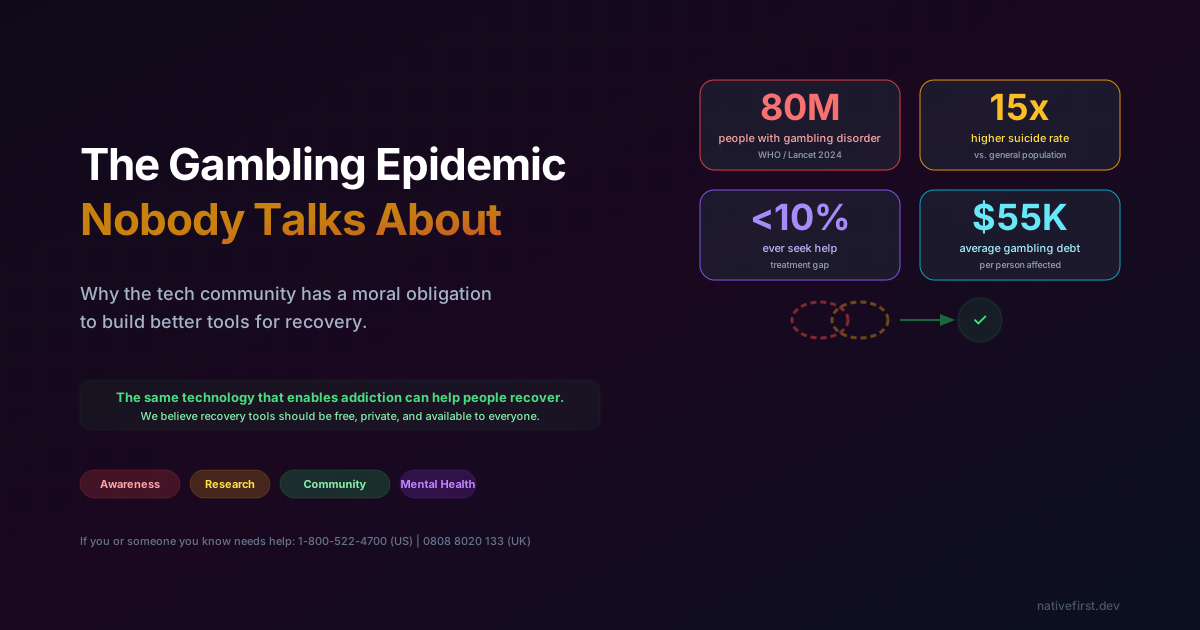
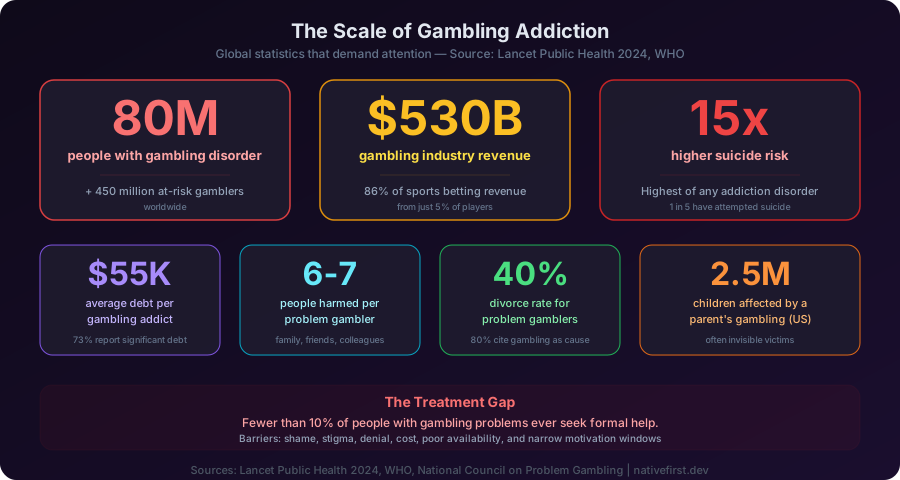
According to a 2024 systematic review published in The Lancet Public Health, approximately 80 million adults worldwide experience gambling disorder or problematic gambling. An additional 450 million adults engage in risk gambling that can lead to financial ruin, broken families, and mental health crises.
These are not abstract numbers. Behind every statistic is a person who cannot stop, who lies to their family about where the money went, who stays up until 3 AM on their phone convinced that the next bet will fix everything.
The Financial Devastation
The average gambling addict carries approximately $55,000 in debt. Seventy-three percent of people with gambling disorder report being in significant debt. In the United States alone, 23 million Americans are in debt because of gambling.
The global gambling industry generates over $530 billion in revenue annually — and a disproportionate amount of that comes from people who can least afford it. In sports betting, 86% of revenue comes from just 5% of players. The industry’s business model quite literally depends on addiction.
The Human Cost
Here is where the numbers become unbearable:
Gambling disorder carries the highest suicide risk of any addiction. People with gambling problems are 15 times more likely to attempt suicide than the general population. In the 20-49 age group, the suicide rate is 19 times higher. One in five people with gambling disorder has attempted to take their own life.
The ripple effect is enormous. Research consistently shows that one problem gambler directly harms six to seven other people — spouses, children, parents, friends. Divorce rates for problem gamblers hit 40-54%, with 80% of those divorced citing gambling as the primary cause. An estimated 2.5 million children in the US alone are affected by a parent’s gambling addiction.
And the cruelest statistic of all: fewer than 10% of people with gambling problems ever seek help. The shame is too great. The stigma too strong. The windows of motivation — those brief moments when someone thinks “I need to stop” — are short, intense, and close quickly if help is not immediately available.
What Exists Today
We spent weeks looking at every app and tool available for people struggling with gambling addiction. Here is an honest assessment of the landscape.
Blocking Tools
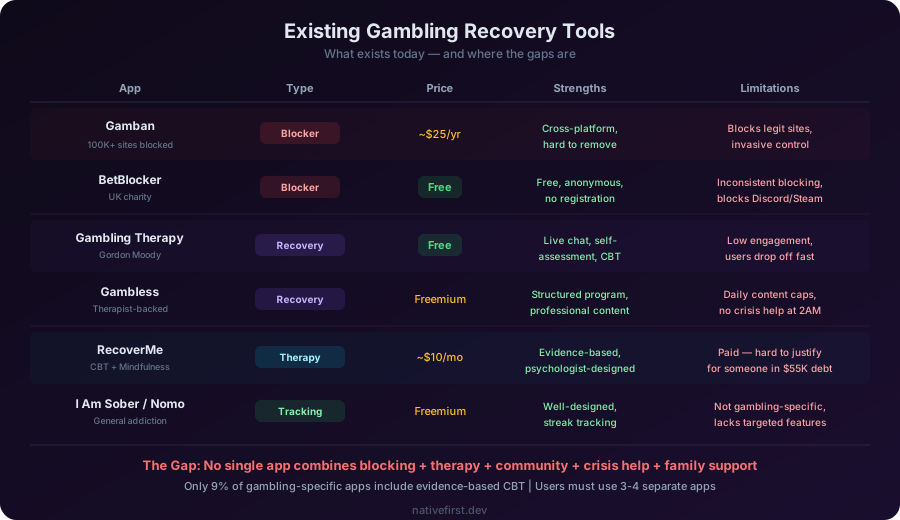
Gamban is the most well-known gambling blocker. It blocks access to over 100,000 gambling sites across all your devices. It costs around $25 per year, and once installed, it is deliberately difficult to remove. It works — but users complain that it also blocks legitimate non-gambling sites, interferes with VPNs, and takes aggressive administrative control of your device.
BetBlocker is a free alternative run as a UK charity. It blocks 90,000+ gambling sites and requires no registration. It is genuinely well-intentioned, but users report inconsistent blocking — some gambling sites slip through, while non-gambling platforms like Discord and Steam get incorrectly blocked.
GamStop is the UK’s national self-exclusion scheme. You register once and all UK-licensed gambling operators must block you. It is free and effective within its scope — but it only covers UK-licensed sites. Offshore operators are unaffected.
These tools do one thing: they put a wall between you and the gambling platforms. That wall is important. But blocking alone does not address the underlying addiction. It is a tourniquet, not a treatment.
Recovery and Therapy Apps
Gambling Therapy, operated by the Gordon Moody Association, offers self-assessment tools, mindfulness exercises, and live chat with advisors. It is free, which is admirable. But it scores low on user engagement — people download it and stop using it within weeks.
Gambless describes itself as the number one gambling recovery app, backed by professional therapists. It offers structured programs and CBT-informed content. But users are frustrated by daily content caps — you can only do a limited number of activities per day, which feels counterproductive when someone is in crisis at 2 AM.
RecoverMe takes a mindfulness-based approach with six CBT therapy sessions. It is designed with psychologists, which shows in the quality. But at $10 per month, it puts a price tag on recovery that many people deep in gambling debt cannot afford.
I Am Sober and Nomo are general addiction tracking apps — not gambling-specific. They track your sober days, money saved, and let you share progress with supporters. They are polished and well-designed, but they lack the gambling-specific features and understanding that people in this particular crisis need.
The Honest Truth
None of these tools are bad. The people building them are doing important work. But when you step back and look at the full picture, the gaps are glaring:
- No single app combines blocking, therapy, community support, and crisis intervention. Users have to cobble together three or four apps to get what should be one integrated experience.
- Only 9% of gambling-specific apps include evidence-based CBT approaches — despite CBT being the gold-standard treatment for gambling disorder.
- Engagement is a massive problem. Gambling-specific apps consistently score lower on engagement metrics than general addiction apps. People download them in a moment of desperation, then stop using them within weeks.
- Almost no apps address the financial devastation. Seventy-three percent of gambling addicts have significant debt, yet there is virtually no integration of financial recovery planning or debt management.
- Family support is nearly nonexistent. One gambler affects six to seven other people, but almost no apps offer meaningful support for the spouses, children, and families caught in the wreckage.
- Crisis intervention is primitive. When someone is standing on the edge of a relapse at midnight, most apps offer a phone number. Not a real-time intervention, not an accountability connection, not an AI-guided breathing exercise — a phone number.
The Treatment Gap
This is the core of the problem. Fewer than 10% of people with gambling disorder seek formal treatment. The barriers are well-documented:
Shame and stigma. Gambling addiction is still treated as a moral failing rather than a medical condition. People hide their problem for years, sometimes decades, before it becomes impossible to conceal.
Denial. The nature of gambling addiction includes a distorted belief that the next win will fix everything. By the time someone acknowledges the problem, the damage is often catastrophic.
Poor availability of services. In many countries, gambling-specific treatment is scarce or nonexistent. Waiting lists are long. Specialists are few.
Cost. Treatment costs money that gambling addicts do not have. The average debt is $55,000. Asking someone in that situation to pay for a therapy app subscription adds insult to injury.
Timing. Researchers describe the motivation windows for gambling addicts as “short, intense, and then closed if help is not available right away.” Someone googling “how to stop gambling” at 1 AM needs help right now — not an appointment request form that gets a response in three business days.
This is where technology should shine. Phones are always in people’s pockets. Apps can be available at 1 AM. AI can provide immediate, personalized support. Digital tools can be free, private, and stigma-free.
And yet, the apps that exist today are not good enough. Not because the people building them are not trying — but because the problem has not received the attention, the investment, or the talent it deserves.
The Tech Community’s Responsibility
Here is where this gets uncomfortable.
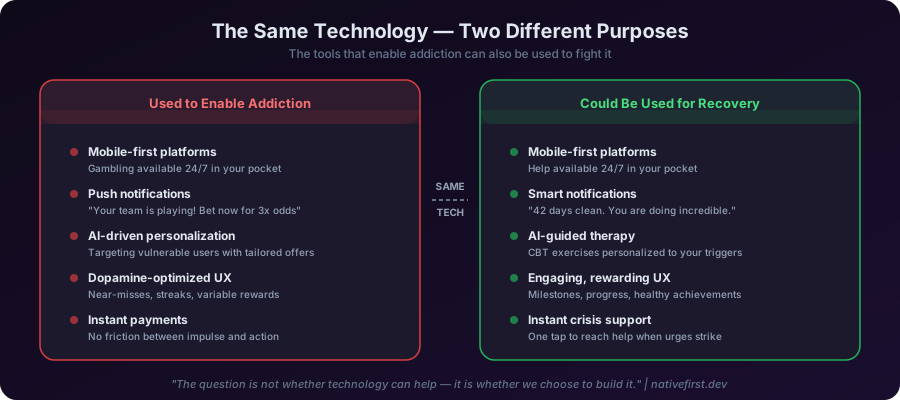
The same technologies that make gambling more addictive — mobile platforms, push notifications, AI-driven personalization, dopamine-optimized UX, instant payments — could be used to help people recover. The same design principles that keep someone scrolling through a betting app for hours could keep them engaged with a recovery program.
The 2024 Lancet Commission on Gambling made this explicit. The gambling industry has deployed strategies directly borrowed from tobacco and alcohol companies: portraying their products as harmless entertainment, emphasizing individual responsibility to deflect from corporate practices, and undermining legitimate science about harm.
The “responsible gambling” framework — the idea that it is the individual’s job to gamble responsibly — has been the industry’s shield for decades. The Lancet Commission called for abandoning this framework entirely in favor of a public health approach where responsibility lies with the industry and the regulators, not just the person who is addicted.
The tech community sits at the center of this. We build the platforms. We design the interfaces. We create the algorithms. We have the skills to build tools that could genuinely help millions of people — and we have a moral obligation to do so.
Not because it is profitable. Not because there is a business model. Because people are dying, and we have the tools to help.
What We Think Is Missing
After weeks of research, conversations, and thinking, here is what we believe a truly effective gambling recovery tool needs:
It must be completely free. No paywalls. No premium tiers. No “unlock more CBT sessions for $9.99/month.” When someone is $55,000 in debt and reaching for help, charging them is obscene.
It must be available instantly. No sign-ups, no registration forms, no waiting for email verification. When someone is in crisis, every second of friction is a second where they might close the app and reopen the betting one.
It must work offline. Recovery does not pause when you lose internet. The app must function fully without a connection.
It must be private. No cloud accounts, no data sharing, no analytics tracking. The shame around gambling addiction is already immense. The tool must be a safe space — and that means the user’s data never leaves their device.
It must combine blocking with therapy. A wall between you and gambling sites is important, but it is not enough. The app needs to help people understand why they gamble and develop real coping strategies — ideally through evidence-based CBT approaches.
It must be engaging enough to compete with gambling apps. This is the design challenge most recovery apps fail. If your recovery app feels like homework, people will abandon it. It needs to be compelling, well-designed, and rewarding in healthy ways — streaks, milestones, progress visualization, community connection.
It must support families. The spouse who does not know how to help. The parent who just discovered their child’s gambling debt. The child who does not understand why money is tight. These people need support too, and they need it inside the same ecosystem.
It must be there at 1 AM. The moment of crisis does not wait for business hours. Whether through AI-guided interventions, pre-recorded exercises, or community features — the app must provide meaningful help at any hour.
Where We Stand
We are not announcing a product today. We are not showing mockups or setting launch dates. What we are doing is being honest about something we have been thinking about.
At NativeFirst, we build native apps for Apple platforms. We believe in software that respects your privacy, works without an internet connection, and feels like it belongs on your device. We believe in tools that solve real problems for real people.
Gambling addiction is a real problem. The existing tools are not enough. And the intersection of everything we believe in — native, private, offline-first, beautifully designed, free — maps almost perfectly onto what a gambling recovery tool needs to be.
We do not know exactly what this will look like yet. We do not know the timeline. We do know that we feel a responsibility — as developers, as members of the tech community, as human beings — to contribute something meaningful to this space.
If this resonates with you — whether you are someone who has struggled with gambling, someone who loves a person who has, or someone in the tech community who wants to help — we would love to hear from you. Your perspective matters, and it will shape whatever we build.
If you or someone you know is struggling with gambling addiction, help is available:
- National Council on Problem Gambling (US): 1-800-522-4700
- GamCare (UK): 0808 8020 133
- Gambling Therapy: gamblingtherapy.org
- Crisis Text Line: Text HOME to 741741
Share this post
Comments
Leave a comment
Rachel Torres
Content & ResearchContent strategist at NativeFirst. Researching the intersection of technology, mental health, and user advocacy.