
I Asked Reddit What Surprised Them About Renovation Costs. 114k People Answered.
It started with a phone call.
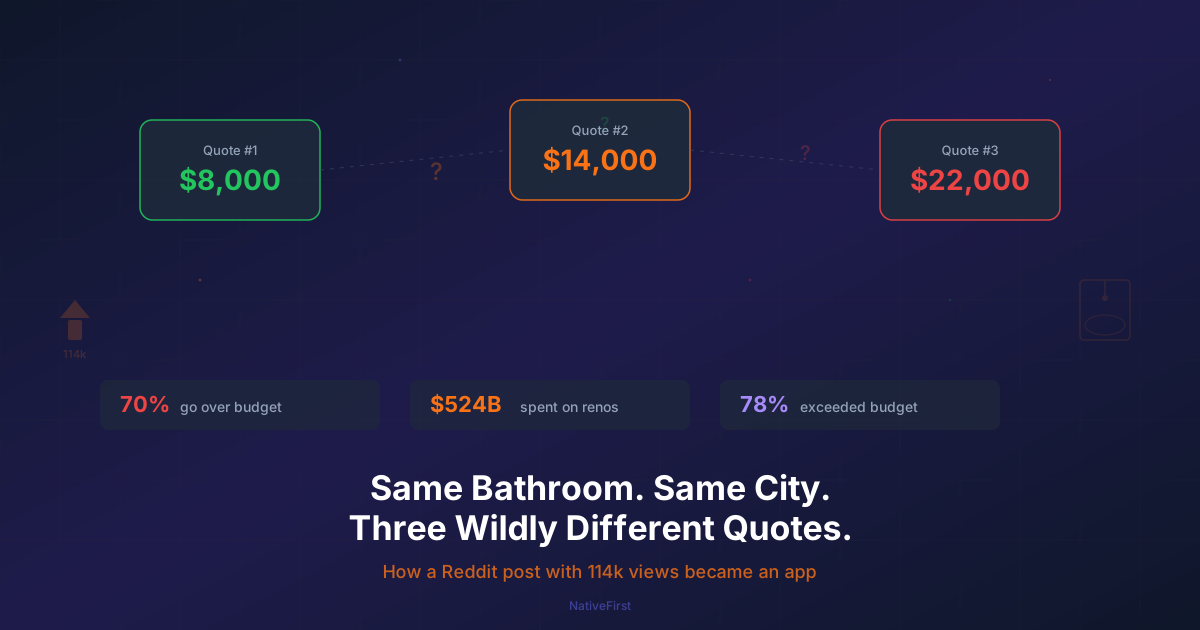
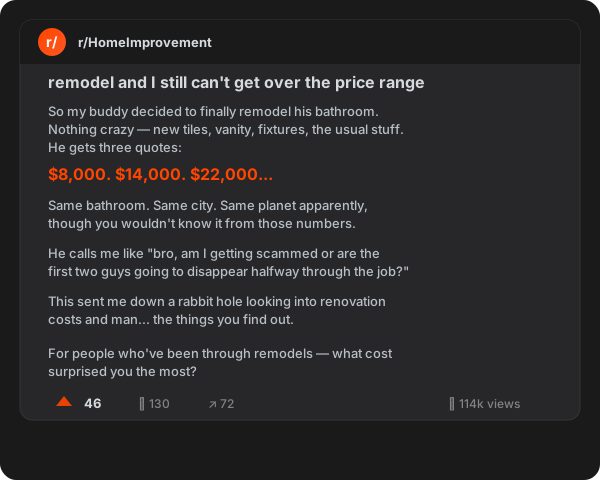
My buddy had just decided to remodel his bathroom. Nothing crazy — new tiles, vanity, fixtures, the usual stuff. He got three quotes:
$8,000. $14,000. $22,000.
Same bathroom. Same city. Same planet apparently, though you wouldn’t know it from those numbers.
He called me like “bro, am I getting scammed or are the first two guys going to disappear halfway through the job?” Honestly, fair question.
That conversation sent me down a rabbit hole. I started researching renovation costs obsessively — regional pricing differences, material vs. labor breakdowns, why contractors quote the way they do. And then I did something that changed everything: I asked real homeowners about their experiences on Reddit.
111,000 people showed up. Over 120 comments poured in within hours. Contractors, homeowners, DIYers, and industry veterans all shared their stories. What I learned completely changed how I think about renovation pricing — and ultimately led the NativeFirst team to build an app to solve the problem.
Here’s what they told me.
1. “F*** You Quotes” Are Real — And More Common Than You Think
One of the first things I learned is that contractors have a name for inflated quotes they give when they don’t actually want the job: “f* you quotes.”**
It sounds harsh, but it makes perfect sense. A contractor who’s already booked out for months doesn’t want to turn you down flat — that burns a bridge. So instead, they quote something absurdly high. If you’re crazy enough to pay it, great — they’ll make a killing. If not, no hard feelings.
That $22,000 quote my buddy got? It might not have been a real price at all. It was probably a contractor saying “I don’t want this job, but I’ll do it if you make it worth my while.”
The takeaway: A high quote doesn’t necessarily mean the job is expensive. It might just mean that particular contractor isn’t interested.
2. The Lowball Quote Trap: How Cheap Contractors Hold You Hostage
Multiple contractors in the thread confirmed something terrifying: some lowball quotes are strategic.
Here’s how it works. A contractor gives you a quote that’s suspiciously cheap to win the job. Work begins. They tear out your old bathroom — tiles, vanity, toilet, everything. And then, standing in what used to be your bathroom, they deliver the news: “Oh yeah, bad news… we found some problems.”
What are you going to do, say no? You’re standing in a gutted room with no functioning bathroom. You’re a hostage.
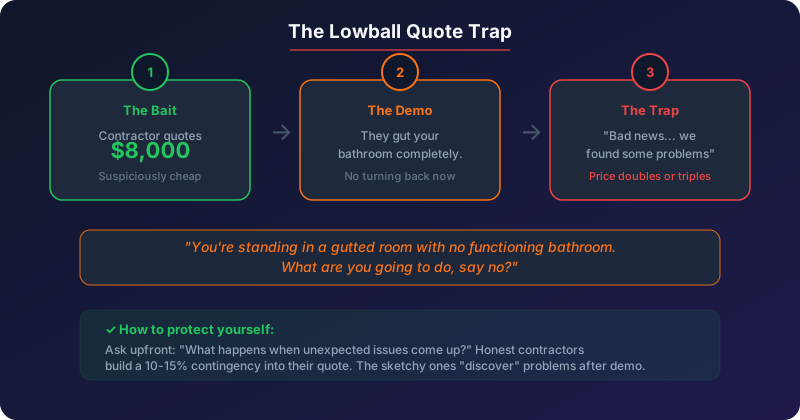
One contractor explained that especially in areas with water, surprises are genuinely common — rotted subfloors from tiny drips nobody noticed, deteriorating pipes behind walls. But the honest ones build a contingency into their quote upfront instead of “discovering” problems after you’re locked in.
The takeaway: The cheapest contractor quote isn’t always the cheapest project. Ask what happens when unexpected issues come up — before any demolition begins.
3. Same Roof, 10x the Price: $40,000 vs. $4,000
One homeowner shared a story that perfectly captures the insanity of renovation pricing. She needed a new metal roof on a small house where the roof slopes up then down. A professional company came out, did a two-hour presentation of all their products, and quoted her $40,000.
A small local crew installed the same roof for $4,000 in two days.
Ten times less. For the same job.
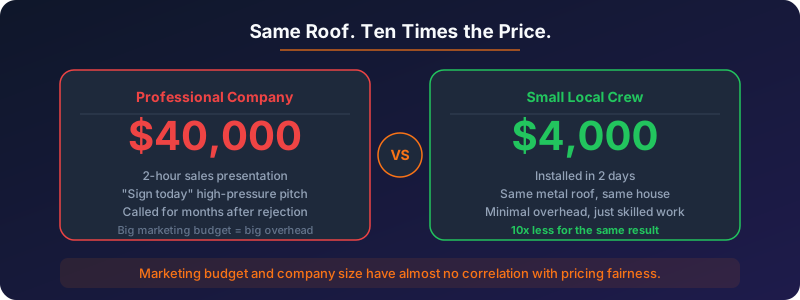
The professional company was a high-pressure sales operation — “sign today, monthly payments” — that called her for months after she said no. The small crew was a lean operation with minimal overhead that just did the work.
The takeaway: The size and marketing budget of a company has almost no correlation with the quality or fairness of their pricing. Sometimes the best work comes from the smallest operations.
4. Your 3 Renovation Quotes Are Probably Comparing Completely Different Things
This was the single biggest insight from the entire thread, and it came from a renovation general contractor.
When homeowners get three quotes, they look at the bottom-line number and compare. But those quotes almost never include the same scope of work. Here’s what those three quotes for my buddy’s bathroom probably looked like:
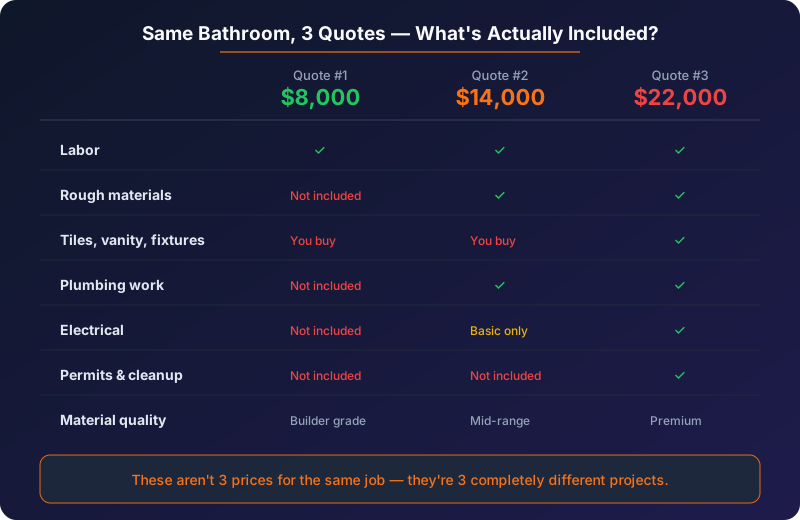
They weren’t quoting the same job. They were quoting three completely different projects. And my buddy — like most homeowners — had no way to tell the difference because he’d never done this before.
The contractor’s advice? Get one detailed quote first and use it as a baseline template. Then have every other contractor bid against the same scope. That way you’re actually comparing apples to apples.
The takeaway: Never compare bottom-line numbers. Always compare scope, materials, and what’s included vs. excluded.
5. DIY Bathroom Materials Cost $2,000 — Contractors Quoted $14-22K
One homeowner remodeled their Jack and Jill bathroom themselves — new tile, countertop, toilet, mirror, tile backsplash, repainted the room. Total cost of materials: $2,000. They did the work themselves and said it turned out better than a contractor’s work.
When you see contractors quoting $14,000-$22,000 for similar scope, you realize you’re looking at $12,000-$20,000 in labor and profit margin for a single bathroom.
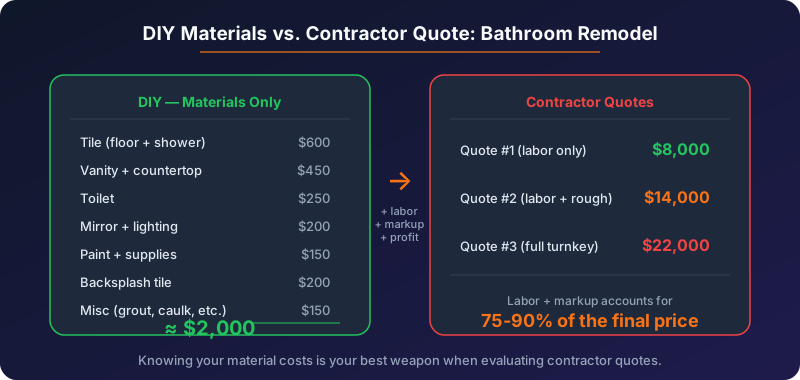
Nobody’s saying contractors don’t deserve to get paid — skilled labor is valuable and not everyone can tile a shower properly. But knowing that materials for a bathroom remodel can be as low as $2,000 gives you an incredibly powerful reference point when evaluating whether a quote is fair or inflated.
The takeaway: Understanding the actual cost of materials is the single best tool you have for evaluating contractor quotes.
6. Renovation Costs Vary 30-40% Depending on Where You Live
A mid-range kitchen remodel in the Midwest can cost 30-40% less than the same project in the Northeast. And it’s not just the coasts — pricing varies significantly even between neighboring cities.
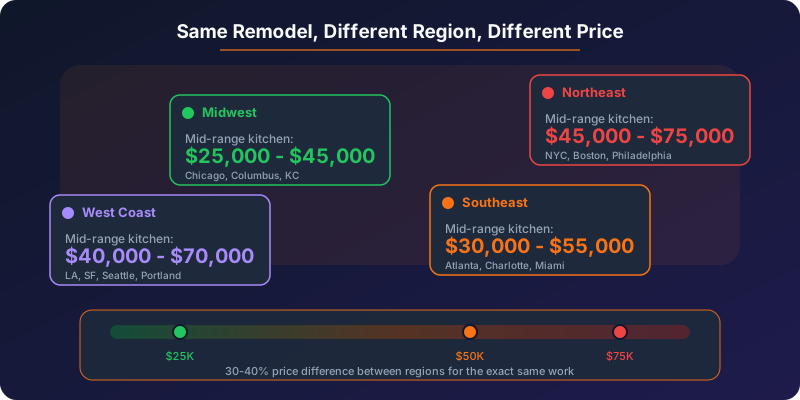
One homeowner shared that a complete bathroom gut-and-remodel cost them $21,000 in the Philadelphia suburbs in 2021. With labor cost increases since then, that same project would likely run $25,000-$28,000 today — but might only be $15,000-$18,000 in a smaller Midwestern city.
Material costs have actually come down in recent years, but labor costs have surged. The gap between what homeowners expect to pay and what they end up paying has never been wider.
The takeaway: National averages for renovation costs are nearly useless. What matters is what things cost in your specific region, right now.
Want to check what it costs in your ZIP code? Try the free renovation cost estimator — instant results, no signup, no contractors calling you. (US market only)
7. The Gold Standard: Remove Materials From the Equation
The most sophisticated homeowner in the thread shared their approach: before getting any quotes, they created a detailed spreadsheet listing every single item needed for their bathroom remodel.
Every tile. Every pipe fitting. Every screw. Every can of paint. Each item had a link to where to buy it and how much was needed. The costs all added up.
They showed this spreadsheet to contractors and said: “I’m buying all materials. Quote me on labor only. If something’s missing or needs to change, tell me.”
This approach does three things:
- Eliminates the scope confusion — every contractor is bidding on the exact same job
- Removes material markup — you’re buying directly, so there’s no 20-40% contractor markup on materials
- Puts you in control — you know exactly what your project needs and what it should cost
The only downside? Building that spreadsheet took significant time and research — time that most people planning a renovation simply don’t have.
The takeaway: Knowing your materials and costs upfront is the most powerful position you can be in when negotiating with contractors. The problem is that most people don’t have the expertise or time to do this research.
The Numbers Behind the Stories
After reading 120+ comments, I pulled the broader data to see if these stories were outliers. They’re not. They’re the norm.
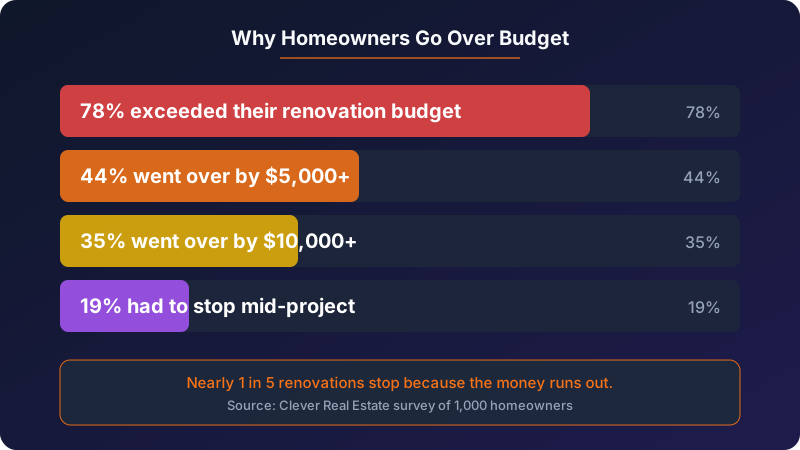
The trust gap between homeowners and the renovation industry is massive — and it goes both ways.
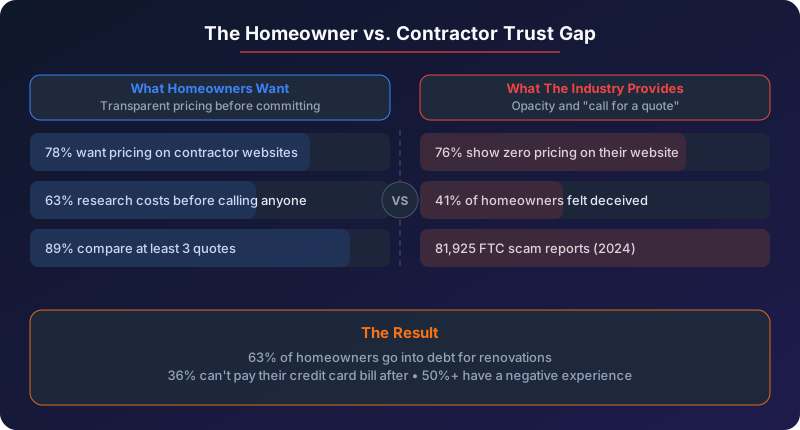
And here are the real costs people are dealing with in 2026:
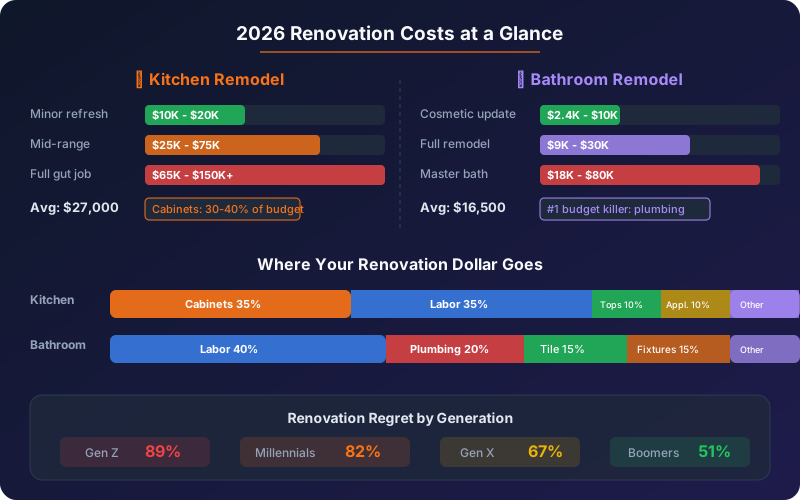
89% of Gen Z renovators regret their renovation. For millennials it’s 82%. Even boomers — who’ve supposedly been through this before — regret it 51% of the time. The #1 regret across all age groups? Spending too much money.
This Is Exactly Why We Built Renovise
After spending weeks deep in renovation cost data and hearing from over 100 homeowners, the pattern was unmistakable:
The core problem isn’t that contractors charge too much. It’s that homeowners have zero frame of reference for what things should cost.
Without knowing that bathroom tiles range from $2-15 per square foot, you can’t tell if a quote includes premium materials or builder grade. Without knowing that labor rates vary 30-40% by region, you can’t tell if a price is fair for your area. Without knowing the typical scope of a bathroom remodel, you can’t tell what’s included and what’s missing.
That general contractor who said “use one quote as a baseline template”? He was right — but what if you had that baseline before your first call to a contractor?
That’s what Renovise does.
Renovise gives you an instant, region-specific cost estimate for your renovation project — broken down by materials, labor, and scope. It’s like having that spreadsheet the sophisticated homeowner built, but generated in seconds instead of days.
Before you call a single contractor, you’ll know:
- What materials for your project actually cost
- What labor rates look like in your area
- What should be included in a fair quote
- Whether a quote is in the right ballpark or wildly off
You’re not going to become a renovation expert overnight. But you don’t have to be. You just need to know enough to not walk in blind — and that’s exactly what Renovise gives you.
Renovise is live on the App Store — the NativeFirst team built it as a native iOS app because renovation planning deserves better than a janky web form. You can also try the free web estimator to get instant cost estimates for your project — budget, mid-range, and premium ranges adjusted for your ZIP code. (US App Store only — pricing data covers all 50 states.)
In the meantime, if you’re planning a renovation: please, for the love of everything, get at least three quotes. And now you know how to actually compare them.
Share this post
Comments
Leave a comment
Mario
Founder & CEOFounder of NativeFirst. Building native Apple apps with SwiftUI and a passion for great user experiences.